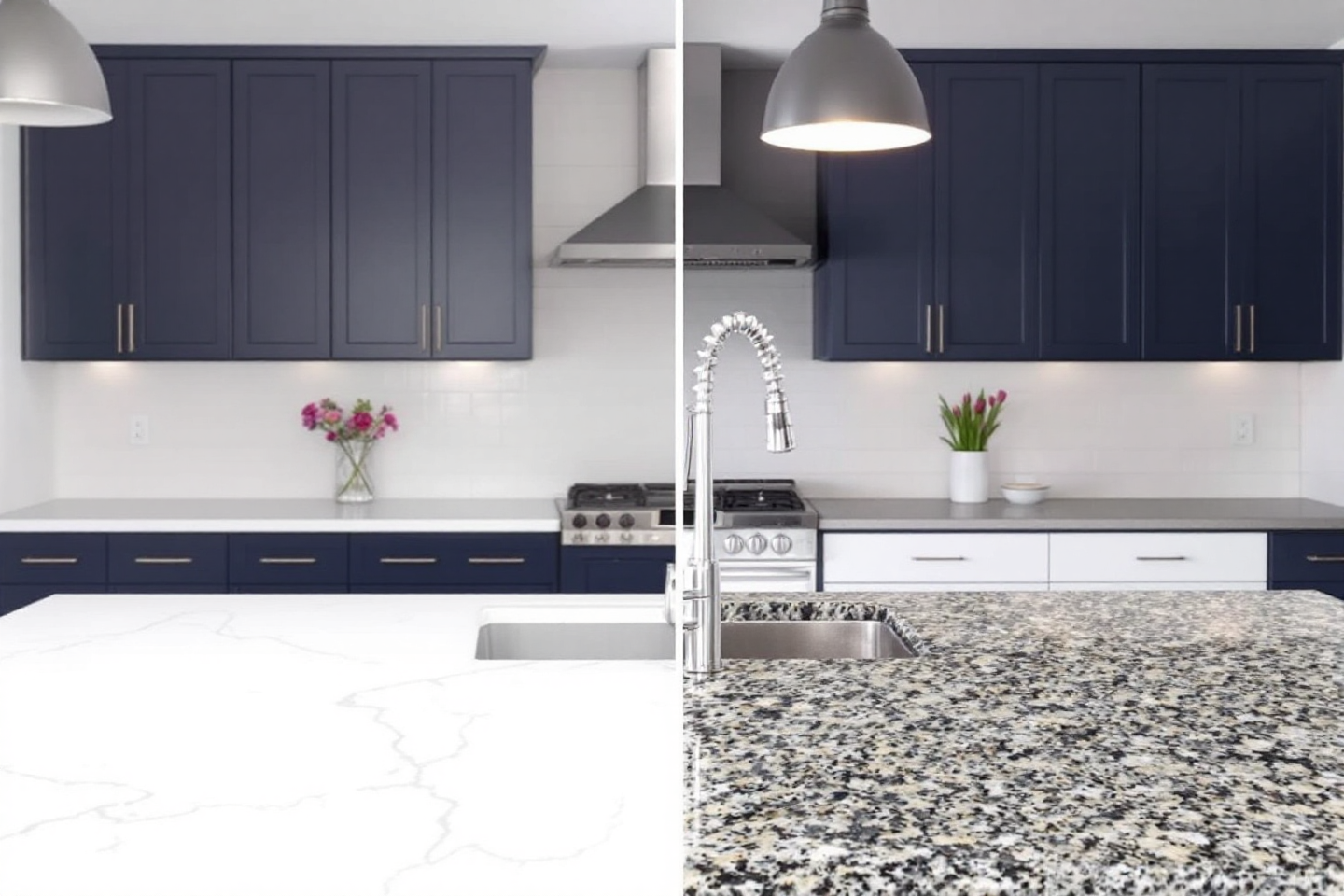
Picking between quartz vs granite countertops can feel like choosing between a luxury SUV and a sports car—both are impressive, just with different perks. Whether you’re remodeling your kitchen or upgrading your bathroom vanity, the countertop you choose sets the tone for your space’s functionality and style. In this guide, we’ll break down every angle—durability, aesthetics, cost, and care—so you can choose the right surface to match your lifestyle and budget.
TLDR – Quick Guide
- Quartz is engineered, non-porous, and low-maintenance—great for busy households.
- Granite is natural, unique, and heat-resistant—ideal for chefs and statement lovers.
- Quartz offers uniform colors, while granite features one-of-a-kind patterns.
- Maintenance differs: Quartz requires less sealing, granite needs periodic sealing.
- Cost is comparable, but quartz may be slightly more depending on brand and finish.
Detailed Breakdown: The Quartz vs Granite Showdown
1. Material Composition
- Quartz countertops are man-made, composed of about 90–95% crushed natural quartz mixed with polymer resins and pigments. This gives quartz a uniform appearance and makes it non-porous, so it resists staining.
- Granite, on the other hand, is a 100% natural stone that’s cut into slabs. Every slab is unique, with natural variations and veining that make it one-of-a-kind.
2. Durability & Maintenance
- Quartz is scratch-resistant, stain-resistant, and doesn’t require sealing, making it a top pick for low-maintenance homeowners. It’s also less likely to crack or chip.
- Granite is also highly durable and heat-resistant, but because it’s porous, it requires periodic sealing to prevent stains and bacterial buildup.
3. Aesthetics
- Quartz offers sleek, consistent designs and a modern aesthetic. It’s often preferred in contemporary or minimalist kitchens.
- Granite brings a natural beauty with unpredictable veining and colors. It’s a favorite for traditional or rustic design styles.
4. Cost Comparison
Both materials typically range from $50 to $150 per square foot installed, depending on the style, brand, and origin. Granite can be slightly less expensive in some markets, especially with locally sourced options. However, high-end quartz with designer finishes can bump up the price.
5. Heat and Chemical Resistance
- Granite wins in heat resistance—you can set a hot pan on it without much worry.
- Quartz, though durable, is not heatproof—extreme heat can damage the resin, so use trivets or hot pads to stay safe.
6. Eco-Friendliness
- Quartz has a smaller carbon footprint when made from recycled materials and locally produced. However, it’s still manufactured.
- Granite is natural but often mined and shipped from overseas, which increases its environmental impact.
7. Installation & Repairs
Both are heavy and require professional installation. Quartz is more uniform and therefore easier to fabricate with fewer seams. If damaged, granite can be more easily repaired, while quartz damage may require replacing entire sections.
Key Takeaways
- Choose quartz for easy upkeep, consistent design, and modern style.
- Go with granite if you love nature’s uniqueness and want maximum heat resistance.
- Both are durable, beautiful, and worthy investments—just match your pick to your lifestyle.
- Maintenance needs and visual preferences often tip the scale more than cost.
- No wrong choice—just the one that fits your kitchen or bathroom vibe best.
FAQs
- Which is more stain-resistant—quartz or granite?
Quartz is more stain-resistant because it’s non-porous, meaning liquids won’t seep in. Granite needs to be sealed to protect against stains, especially from wine or oil. - Is quartz or granite better for resale value?
Both are considered premium materials and will boost your home’s value. Quartz may edge out in appeal for modern buyers due to its low maintenance. - Can you cut on granite or quartz without a cutting board?
You can, but you shouldn’t. Both materials can dull your knives, and quartz can get scratched if you’re too aggressive. Always use a cutting board. - How often does granite need sealing?
It depends on the usage, but typically once a year. Some newer sealants can last up to 3 years with proper care. - Can I install quartz or granite myself?
Not recommended. Both are extremely heavy and require precise cutting, leveling, and sealing. Professional installation ensures longevity and safety.